Baking Enzymes Market: Fungal Alpha-Amylase Specification Checklist for Baking — Supplier Guide
Compare fungal alpha-amylase for baking with key specifications, dosage, QC checks, COA/TDS/SDS review, and supplier qualification steps.
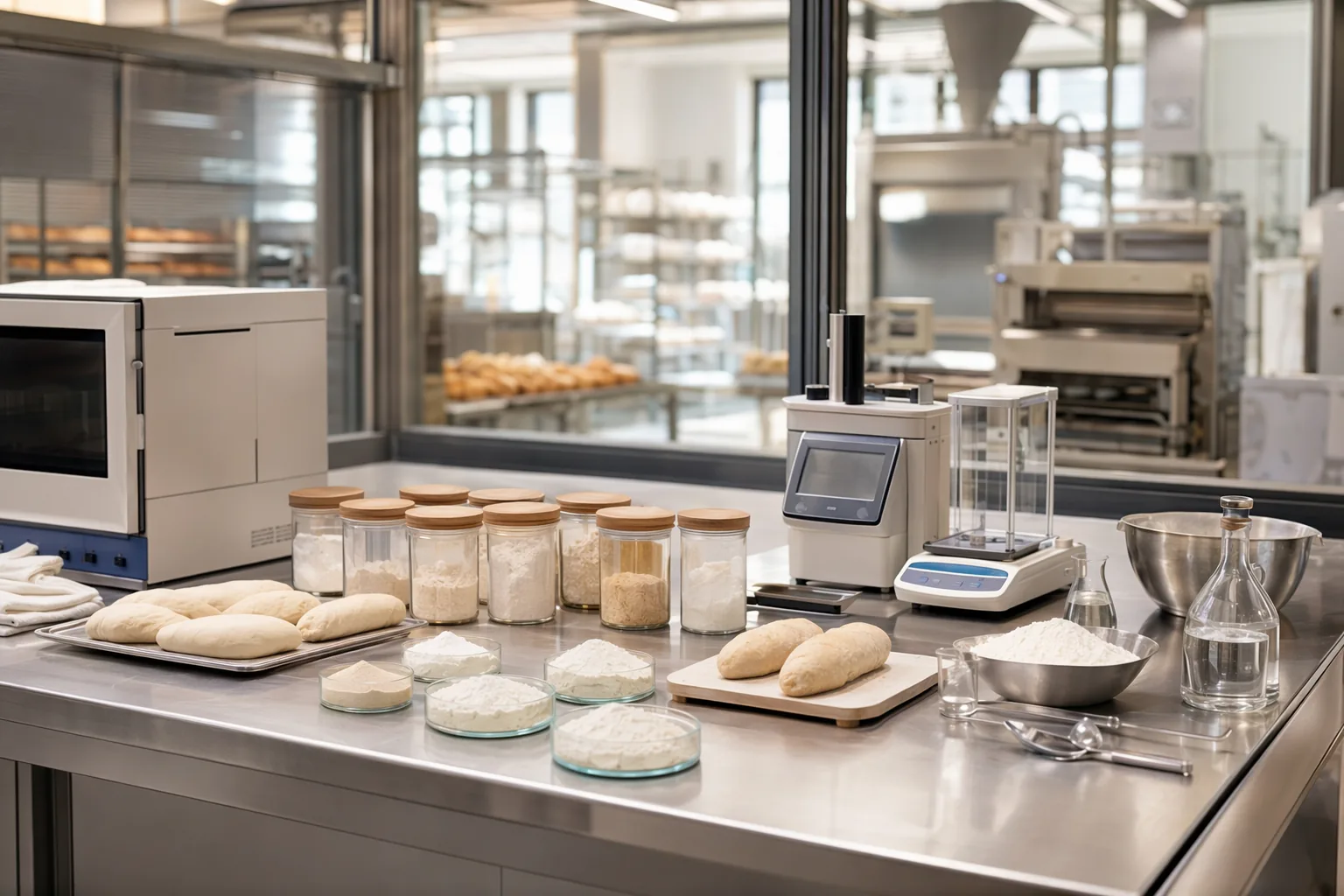
For bakeries, premix producers, and flour mills, fungal alpha-amylase is a practical bread enzyme for controlled starch hydrolysis, fermentation support, crust color, volume, and crumb texture.
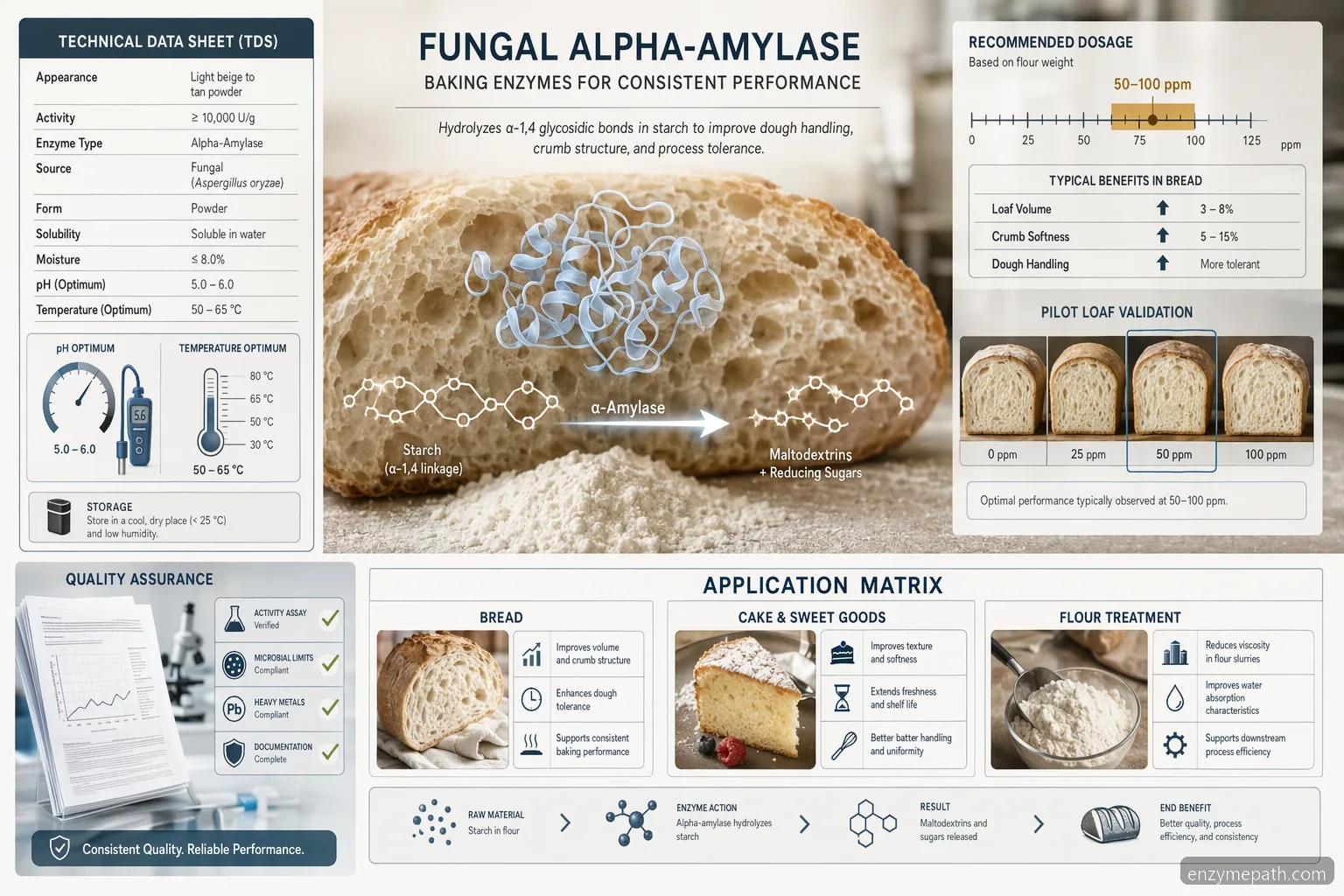
How fungal alpha-amylase compares in the baking enzymes market
In the baking enzymes market, fungal alpha-amylase is usually evaluated against bacterial alpha-amylase, maltogenic amylase, glucoamylase, xylanase, lipase, protease, and oxidase systems. Its main role is to hydrolyze damaged starch into fermentable sugars and dextrins, supporting yeast activity, crust browning, loaf volume, and crumb softness. Compared with more thermostable bacterial amylases, fungal alpha-amylase is often preferred where the buyer wants activity during mixing, proofing, and early baking, followed by reduced residual activity after heat exposure. For anti-staling performance, maltogenic amylase may be compared alongside fungal amylase because it targets crumb firming differently. For B2B buyers in the enzymes baking industry, the best choice depends on flour quality, formula sugar level, fermentation time, product format, and label expectations. The comparison should be technical, not generic: activity unit definition, application dosage, process window, and cost-in-use matter more than the enzyme category name alone.
Best fit: pan bread, buns, rolls, cakes, and flour standardization. • Main comparison: fungal alpha-amylase versus bacterial or maltogenic amylase. • Buyer focus: predictable fermentation, color, volume, and crumb texture.
Process conditions to request on the TDS
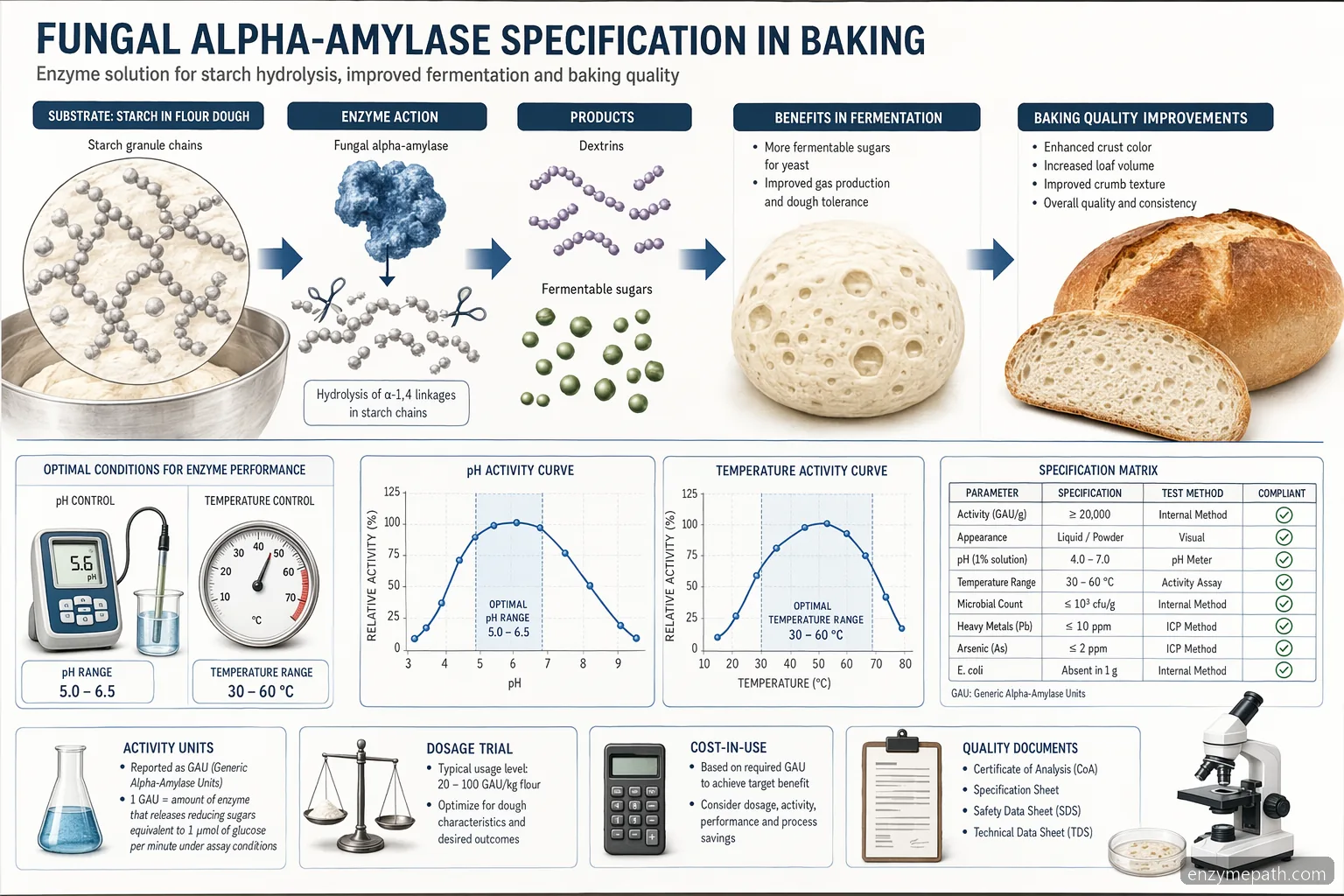
A useful technical data sheet should define the process window for enzymes in baking, not only list an enzyme name. For fungal alpha-amylase used in baking, suppliers commonly position activity in mildly acidic to near-neutral dough systems, often around pH 4.5 to 6.0, with practical activity during mixing, floor time, proofing, and early oven spring. Temperature guidance should include the activity range, typical optimum range, and expected heat inactivation behavior. Many fungal alpha-amylase products show useful activity around 35 to 60°C, then lose activity as the crumb temperature rises during baking; exact behavior depends on strain, formulation, moisture, and matrix. Buyers should request activity units, assay method, carrier, particle size or liquid viscosity, recommended storage, shelf life, and compatibility with oxidants, emulsifiers, preservatives, yeast foods, and flour improvers. This prevents over-dosing, gummy crumb, weak sidewalls, or inconsistent performance across flour lots.
Request pH range, temperature range, and inactivation profile. • Confirm assay method and whether activity units are supplier-specific. • Check compatibility with flour improvers, emulsifiers, and premix handling.
Dosage, pilot validation, and cost-in-use
Dosage for baking enzymes should be validated by flour weight and enzyme activity, not copied from another bakery. As a starting screen, fungal alpha-amylase preparations may be trialed in low ppm levels or in broad bands such as 5 to 50 g per 100 kg flour, depending on activity strength and formulation. Concentrated products may require much lower inclusion, while diluted premix carriers may require higher weights. Pilot validation should include a blank control, low-mid-high dosage ladder, and the current improver system. Measure dough handling, proof height, bake loss, loaf volume, sliceability, crust color, crumb openness, and crumb firmness over storage. Cost-in-use should be calculated per metric ton of flour or per 1,000 loaves, including yield effect, waste reduction, shelf-life target, and premix dilution cost. For the baking enzymes in bread application market, the lowest price per kilogram is rarely the best comparison metric.
Run a control plus at least three dosage levels. • Calculate cost-in-use by flour tonnage or finished units. • Validate on actual flour lots and production conditions.
Quality documents and supplier qualification
Industrial buyers comparing enzymes for baking should qualify the supplier before locking a specification. At minimum, request a certificate of analysis for each lot, a current technical data sheet, and a safety data sheet. The COA should identify lot number, activity, appearance, moisture or microbial indicators where applicable, and release criteria. The TDS should cover application guidance, storage, shelf life, packaging, solubility or dispersibility, and recommended handling. The SDS should support safe warehouse and production handling for powders or liquids. Depending on the customer and market, also request allergen statements, country of origin, composition disclosure within commercial limits, GMO status statements where relevant, and food-grade compliance statements applicable to the target region. Avoid accepting vague claims without test methods. Supplier qualification should also review batch-to-batch consistency, lead time, change notification practice, traceability, technical support, sample availability, and responsiveness during plant trials.
Required documents: COA, TDS, SDS. • Evaluate lot consistency, lead time, traceability, and change control. • Ask for samples suitable for pilot and plant-scale trials.
Application fit across bread, cake, and flour treatment
In the global baking enzymes market, fungal amylase is used differently by bakeries, cake manufacturers, flour mills, and baking mix producers. In bread, it is typically selected to improve yeast fermentation support, oven spring, crust color, and crumb softness when flour has insufficient natural amylase activity. In cake, the objective may be batter performance, moisture perception, and texture consistency, but dosage must be controlled to avoid stickiness or collapse. In flour treatment, mills may use fungal alpha-amylase to standardize flour performance for customers with different fermentation systems. In the baking mix and enzymes market, dispersion, carrier selection, dust control, and stability during storage become especially important. Buyers should compare baking enzymes by finished product outcome, not only by enzyme class. The best specification is one that translates lab activity into reliable production performance with documented QC acceptance limits.
Bread: fermentation support, color, volume, and crumb quality. • Cake: texture consistency and controlled starch modification. • Flour treatment: standardization across variable wheat lots.
Technical Buying Checklist
Buyer Questions
Fungal alpha-amylase hydrolyzes damaged starch into smaller dextrins and fermentable sugars. In bread, this can support yeast fermentation, oven spring, crust color, loaf volume, and crumb texture when used at the right dosage. The effect depends on flour quality, formula, fermentation time, pH, baking profile, and interaction with other enzymes or improvers. Pilot testing is essential before plant adoption.
Compare baking enzymes by activity units, assay method, dosage on flour weight, pH and temperature range, inactivation behavior, carrier system, documentation, and pilot performance. A low price per kilogram can be misleading if the product has lower activity or requires more handling. Use cost-in-use, finished product quality, COA consistency, TDS clarity, SDS handling guidance, and supplier support as the comparison framework.
No. Baking soda is sodium bicarbonate, a chemical leavening and pH-adjusting ingredient, not an enzyme and not an enzyme cleaner. In industrial baking, enzymes are biological catalysts such as amylases, xylanases, proteases, or lipases. They act on specific substrates under defined process conditions. Baking soda may appear in formulas, but it does not provide the starch-hydrolyzing function of fungal alpha-amylase.
Fungal alpha-amylase can contribute to crumb softness by modifying starch during dough processing and early baking, but anti-staling performance should be validated against shelf-life targets. Maltogenic amylase is often compared when crumb firming over several days is the main concern. The best choice depends on product type, storage time, softness measurement, sliceability, and whether the formula also uses emulsifiers, gums, or other enzymes.
Run a controlled trial with the current formula, a blank control, and multiple enzyme dosages. Track flour analysis, Falling Number, dough handling, proof height, bake loss, loaf volume, crust color, crumb grain, sliceability, and crumb firmness over the target shelf life. Confirm that the chosen dosage is robust across at least several flour lots before setting a purchasing specification.
Fungal Alpha-Amylase (Baking Grade) for Research & Industry
Need Fungal Alpha-Amylase (Baking Grade) for your lab or production process?
ISO 9001 certified · Food-grade & research-grade · Ships to 80+ countries
Frequently Asked Questions
What does fungal alpha-amylase do in bread applications?
Fungal alpha-amylase hydrolyzes damaged starch into smaller dextrins and fermentable sugars. In bread, this can support yeast fermentation, oven spring, crust color, loaf volume, and crumb texture when used at the right dosage. The effect depends on flour quality, formula, fermentation time, pH, baking profile, and interaction with other enzymes or improvers. Pilot testing is essential before plant adoption.
How should buyers compare baking enzymes from different suppliers?
Compare baking enzymes by activity units, assay method, dosage on flour weight, pH and temperature range, inactivation behavior, carrier system, documentation, and pilot performance. A low price per kilogram can be misleading if the product has lower activity or requires more handling. Use cost-in-use, finished product quality, COA consistency, TDS clarity, SDS handling guidance, and supplier support as the comparison framework.
Is baking soda an enzyme cleaner?
No. Baking soda is sodium bicarbonate, a chemical leavening and pH-adjusting ingredient, not an enzyme and not an enzyme cleaner. In industrial baking, enzymes are biological catalysts such as amylases, xylanases, proteases, or lipases. They act on specific substrates under defined process conditions. Baking soda may appear in formulas, but it does not provide the starch-hydrolyzing function of fungal alpha-amylase.
Can fungal alpha-amylase be used as an anti-staling enzyme?
Fungal alpha-amylase can contribute to crumb softness by modifying starch during dough processing and early baking, but anti-staling performance should be validated against shelf-life targets. Maltogenic amylase is often compared when crumb firming over several days is the main concern. The best choice depends on product type, storage time, softness measurement, sliceability, and whether the formula also uses emulsifiers, gums, or other enzymes.
What pilot checks are recommended before buying at scale?
Run a controlled trial with the current formula, a blank control, and multiple enzyme dosages. Track flour analysis, Falling Number, dough handling, proof height, bake loss, loaf volume, crust color, crumb grain, sliceability, and crumb firmness over the target shelf life. Confirm that the chosen dosage is robust across at least several flour lots before setting a purchasing specification.
Related: Fungal Alpha-Amylase for Baking Performance Control
Turn This Guide Into a Supplier Brief Request a fungal alpha-amylase baking sample, TDS, SDS, COA template, and pilot-trial dosage guidance from EnzymePath. See our application page for Fungal Alpha-Amylase for Baking Performance Control at /applications/baking-enzymes-market/ for specs, MOQ, and a free 50 g sample.
Contact Us to Contribute