How to Use Fungal Alpha-Amylase in Baking Formulations
Formulation guide for fungal alpha-amylase in bread, cake, and flour treatment, with dosage, pH, temperature, QC, and supplier checks.
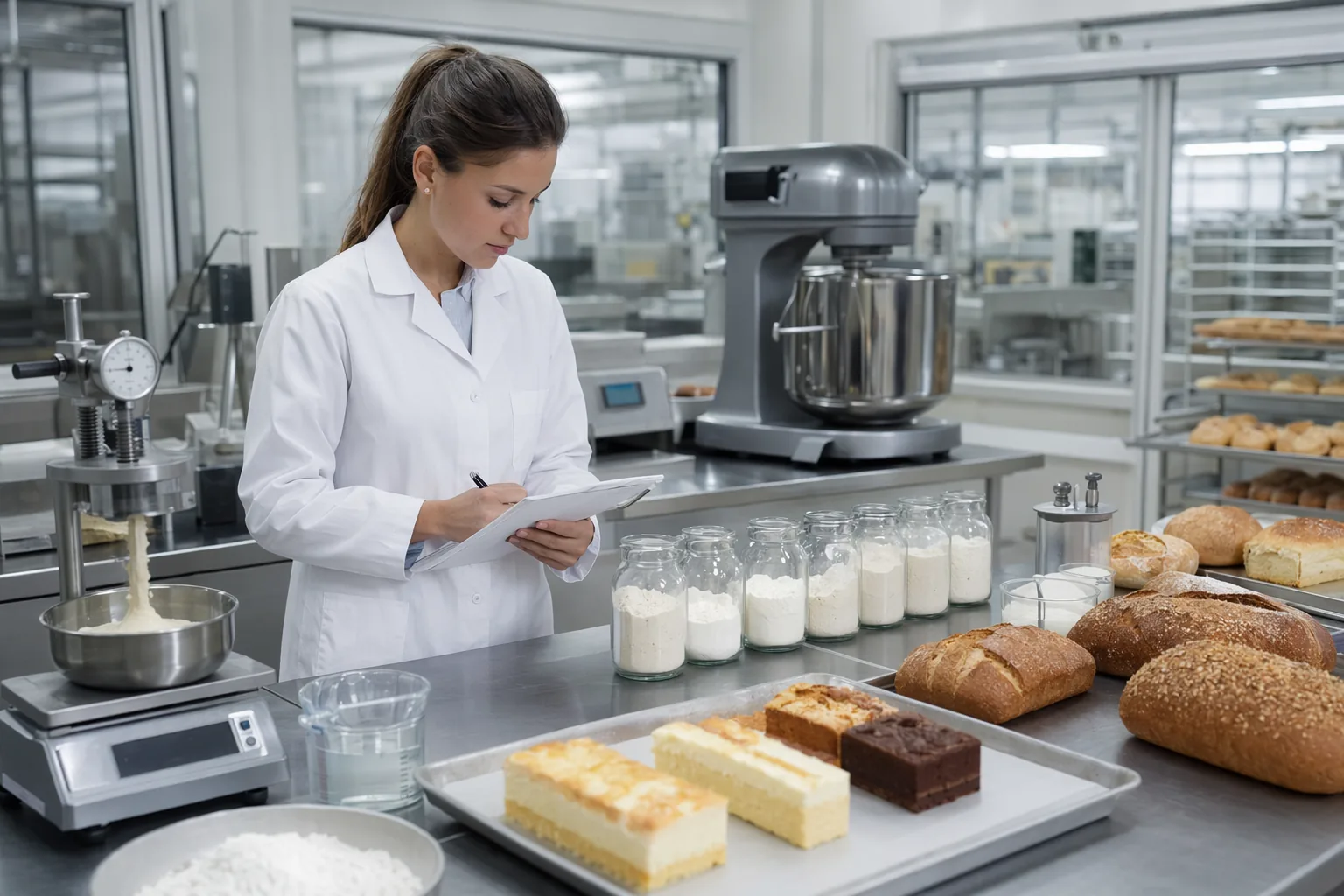
Fungal alpha-amylase is a practical baking enzyme for improving dough fermentation, loaf volume, crumb softness, and flour consistency when validated at plant scale.
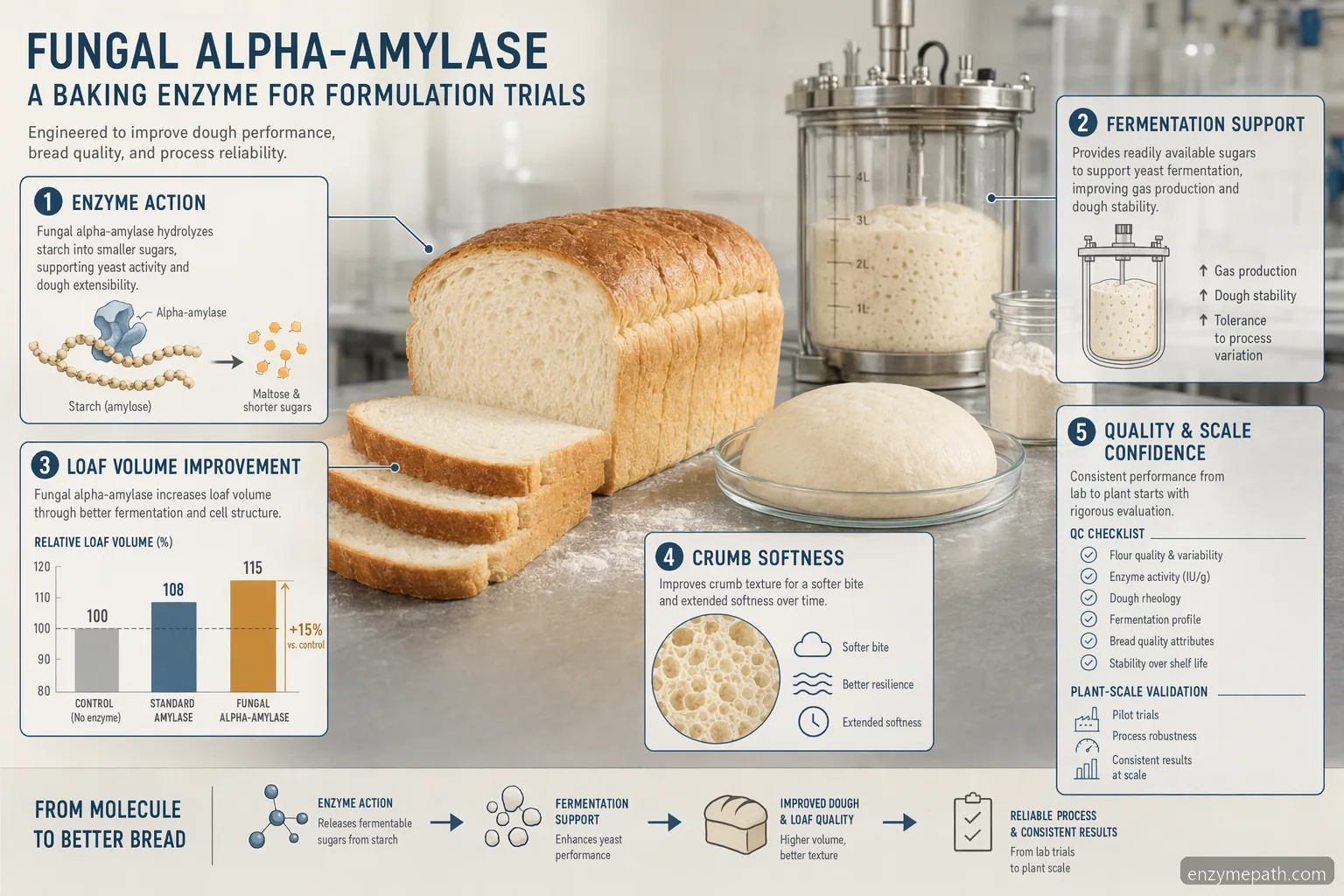
Role of fungal alpha-amylase in baking
Fungal alpha-amylase hydrolyzes damaged starch in flour into smaller dextrins and fermentable sugars. In bread, this can support yeast activity, crust color development, oven spring, loaf volume, and a softer initial crumb. In cake and sweet goods, it may help manage starch conversion and eating quality, but it must be balanced against formula sugar, fat, emulsifier, and baking conditions. For flour treatment, mills and premix manufacturers use controlled enzyme addition to standardize performance across variable wheat lots. Compared with some anti-staling enzyme systems, fungal alpha-amylase is primarily a fermentation and crumb-quality tool; it may contribute to delayed firming, but it is not a direct substitute for maltogenic amylase in every anti-staling program. The best results come from matching enzyme activity to flour damage, process time, pH, and bake profile.
Best-fit applications: pan bread, buns, rolls, cakes, premixes, and flour correction • Key risks: over-soft crumb, gumminess, sticky dough, or excessive crust color • Common checks: falling number, RVA or amylograph, bake volume, crumb texture, and sensory review
Starting dosage for formulation trials
Because commercial baking enzymes are sold at different activity strengths, dosage should be set by the supplier’s activity declaration rather than by weight alone. As a practical screening range, formulators often begin with about 10 to 100 ppm of commercial enzyme preparation on flour weight, or a supplier-recommended unit dose such as SKB, FAU, or equivalent per kilogram of flour. For flour mills and large bakeries, trial designs should include untreated control flour, a low dose, a midpoint, and a high dose. Evaluate both fresh-bake performance and product quality after storage. Dose reduction is often possible when flour has high damaged starch or when formulas already contain malt flour, sugar, or other amylases. Record enzyme lot, flour lot, mixer energy, dough temperature, proof time, and bake profile so the cost-in-use calculation reflects real process conditions.
Use flour weight as the primary dosage basis • Confirm the enzyme activity unit used on the COA and TDS • Run side-by-side trials against the current bread enzyme system
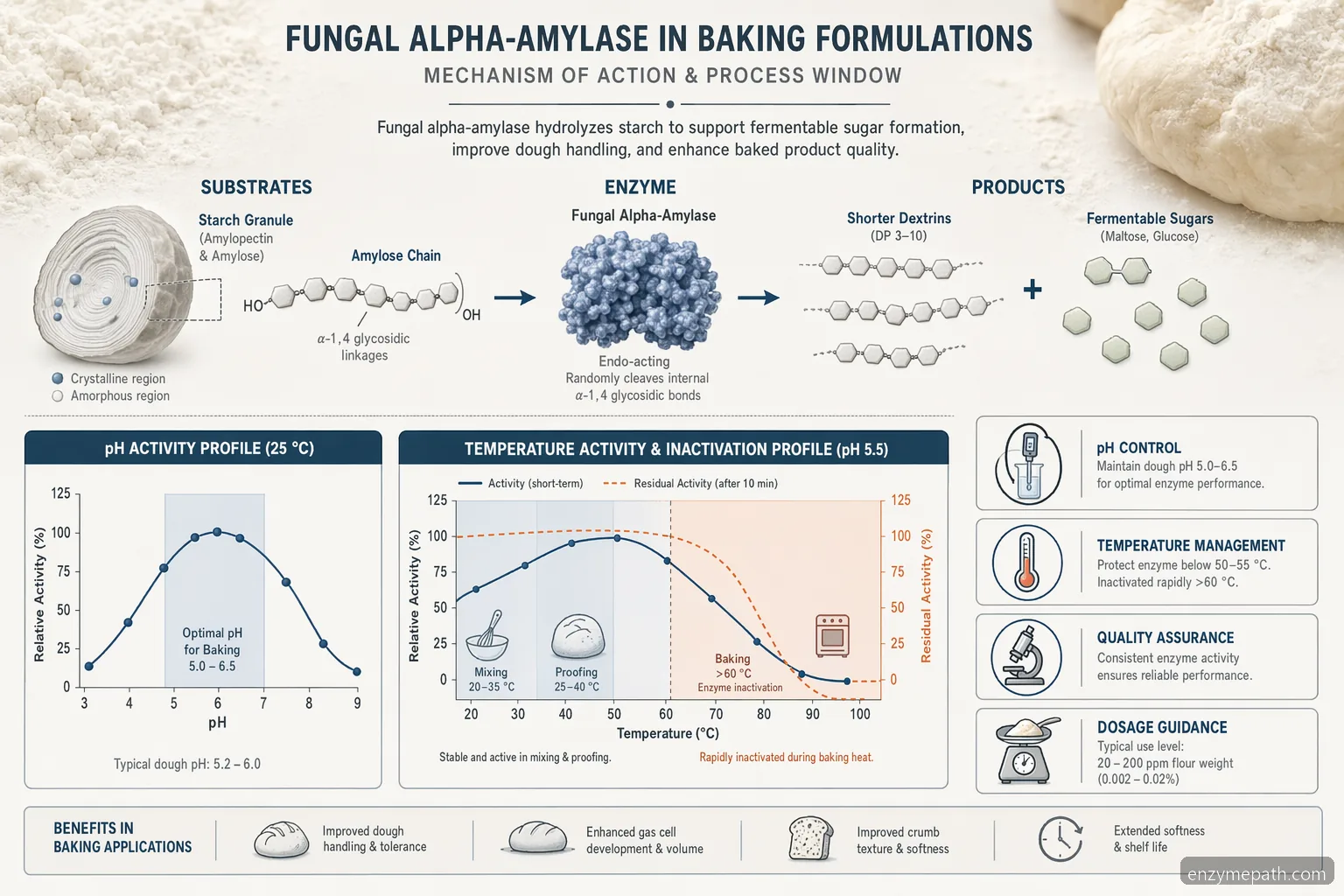
Process conditions: pH, temperature, and inactivation
Fungal alpha-amylase used in baking typically performs well in the mildly acidic to near-neutral range found in dough, commonly around pH 4.5 to 6.0. Activity increases as dough warms during mixing, proofing, and early baking, with many fungal alpha-amylases showing useful activity around 30 to 60 °C depending on the product grade. During baking, starch gelatinization and rising crumb temperature accelerate substrate access, but the enzyme is normally denatured as the crumb reaches higher temperatures, often above roughly 70 to 85 °C. Exact values depend on the strain, formulation, moisture, salts, sugars, and enzyme stabilization. For controlled performance, avoid unusually long holding times at warm dough temperatures unless validated. Also verify compatibility with oxidants, reducing agents, preservatives, emulsifiers, and other enzymes in the improver blend.
Typical dough pH target: about 4.5 to 6.0 • Useful activity range: commonly 30 to 60 °C before thermal inactivation • Validate with the actual flour, formula, and bake curve
QC checks for bread, cake, and flour treatment
A robust QC plan prevents a baking enzyme from becoming a source of process variability. For incoming flour, measure moisture, protein, ash, damaged starch, falling number, and, where available, amylograph or RVA viscosity. In dough, track absorption, mix time, dough temperature, stickiness, proof height, and tolerance. For bread, measure loaf volume, specific volume, crumb grain, sliceability, moisture, water activity, crust color, and texture profile over the intended shelf life. For cake, monitor batter viscosity, specific gravity, bake height, symmetry, crumb tenderness, and gumminess. In flour treatment, retain samples from each treated lot and conduct a standardized test bake. Establish acceptance bands before commercial rollout, and keep retained enzyme and flour samples to support root-cause investigation if texture, fermentation speed, or color changes in production.
Use an untreated control in every validation bake • Track fresh and stored texture, not only oven performance • Link QC results to enzyme lot and flour lot traceability
Supplier qualification and documentation
B2B buyers should qualify baking enzyme suppliers on technical support, documentation, consistency, and commercial reliability. Request a current COA for each lot, a TDS describing activity units and recommended use, and an SDS covering handling, storage, and occupational exposure controls. Also ask for regulatory, allergen, GMO, country-of-origin, and food-use statements that match the target sales region. Avoid relying on broad claims without lot-specific activity data or a validated method. For supplier comparison, calculate cost-in-use per tonne of flour or per thousand finished units, not only price per kilogram. Include enzyme activity, required dosage, processing benefit, waste reduction, and shelf-life impact in the business case. During approval, confirm lead time, minimum order quantity, packaging, shelf life, storage temperature, technical service availability, and change-notification practices.
Required documents: COA, TDS, SDS, and food-use statements • Commercial checks: MOQ, lead time, packaging, shelf life, and lot consistency • Compare suppliers by activity-adjusted cost-in-use
Common formulation issues and corrections
If dough becomes sticky, proof tolerance drops, or the finished crumb is gummy, reduce the fungal alpha-amylase dose, check flour damaged starch, and confirm whether other amylases are present in the improver, malt flour, or premix. Excessive crust color can indicate too much fermentable sugar or an interaction with bake time and temperature. If volume improvement is limited, the issue may be yeast activity, gluten strength, mixing, proofing, oxidant balance, or flour quality rather than amylase level. For anti-staling goals, compare fungal alpha-amylase with complementary enzymes such as maltogenic amylase or xylanase in a controlled design. Do not treat baking soda as an enzyme; it is a chemical leavening agent, not an enzyme cleaner or biological catalyst. Keep troubleshooting data structured so scale-up decisions are evidence based.
Sticky dough or gummy crumb usually means the dose is too high or the system is unbalanced • Weak volume response may be caused by flour strength, yeast, or process limits • Anti-staling programs often require more than one enzyme class
Technical Buying Checklist
Buyer Questions
Fungal amylase baking applications focus on controlled starch hydrolysis. In bread, this can improve yeast nutrition, fermentation consistency, loaf volume, crust color, and fresh crumb softness. In flour treatment, it helps standardize performance across variable wheat lots. The benefit depends on flour damage, formula, proof time, bake profile, and correct dosage, so pilot validation is essential before routine production use.
Evaluate baking enzyme suppliers by activity strength, lot consistency, documentation, technical support, lead time, packaging, and cost-in-use. Ask for COA, TDS, SDS, regulatory and allergen statements, and recommended dosage in activity units. Run the same pilot bake with each candidate and compare loaf volume, crumb texture, shelf-life performance, handling, and total cost per tonne of flour.
No. Baking soda is sodium bicarbonate, a chemical leavening agent that releases carbon dioxide when it reacts with acids and heat. It is not an enzyme and does not catalyze starch or protein breakdown like baking enzymes do. Search terms such as “is baking soda an enzyme” can cause confusion, but the functions in formulation are completely different.
No. Baking soda enzyme cleaner is not an accurate technical description unless an actual enzyme is included in the cleaner formulation. Baking soda can help with odor control or mild alkalinity, but enzyme cleaners use protease, amylase, lipase, or other enzymes to break down soils. For bakery sanitation, follow the cleaner supplier’s SDS, label directions, and food-contact surface procedures.
Fungal alpha-amylase may contribute to softer crumb and slower perceived firming in some formulas, but it is not always the primary anti-staling enzyme. Maltogenic amylase is often evaluated for stronger anti-staling performance. The best approach is a controlled trial comparing fungal alpha-amylase alone, the current improver, and blended baking enzymes under the same packaging and storage conditions.
Fungal Alpha-Amylase (Baking Grade) for Research & Industry
Need Fungal Alpha-Amylase (Baking Grade) for your lab or production process?
ISO 9001 certified · Food-grade & research-grade · Ships to 80+ countries
Frequently Asked Questions
What is the main benefit of fungal amylase baking applications?
Fungal amylase baking applications focus on controlled starch hydrolysis. In bread, this can improve yeast nutrition, fermentation consistency, loaf volume, crust color, and fresh crumb softness. In flour treatment, it helps standardize performance across variable wheat lots. The benefit depends on flour damage, formula, proof time, bake profile, and correct dosage, so pilot validation is essential before routine production use.
How do I choose between baking enzyme suppliers?
Evaluate baking enzyme suppliers by activity strength, lot consistency, documentation, technical support, lead time, packaging, and cost-in-use. Ask for COA, TDS, SDS, regulatory and allergen statements, and recommended dosage in activity units. Run the same pilot bake with each candidate and compare loaf volume, crumb texture, shelf-life performance, handling, and total cost per tonne of flour.
Is baking soda an enzyme?
No. Baking soda is sodium bicarbonate, a chemical leavening agent that releases carbon dioxide when it reacts with acids and heat. It is not an enzyme and does not catalyze starch or protein breakdown like baking enzymes do. Search terms such as “is baking soda an enzyme” can cause confusion, but the functions in formulation are completely different.
Is baking soda an enzyme cleaner for bakery sanitation?
No. Baking soda enzyme cleaner is not an accurate technical description unless an actual enzyme is included in the cleaner formulation. Baking soda can help with odor control or mild alkalinity, but enzyme cleaners use protease, amylase, lipase, or other enzymes to break down soils. For bakery sanitation, follow the cleaner supplier’s SDS, label directions, and food-contact surface procedures.
Can fungal alpha-amylase be used as an anti-staling enzyme?
Fungal alpha-amylase may contribute to softer crumb and slower perceived firming in some formulas, but it is not always the primary anti-staling enzyme. Maltogenic amylase is often evaluated for stronger anti-staling performance. The best approach is a controlled trial comparing fungal alpha-amylase alone, the current improver, and blended baking enzymes under the same packaging and storage conditions.
Related: Fungal Alpha-Amylase for Baking Performance Control
Turn This Guide Into a Supplier Brief Request a baking enzyme TDS, sample, and pilot-trial support for your flour or bakery formulation. See our application page for Fungal Alpha-Amylase for Baking Performance Control at /applications/baking-enzymes-market/ for specs, MOQ, and a free 50 g sample.
Contact Us to Contribute