Alpha Amylase Baking Enzyme Market: Fungal Alpha-Amylase Dosage, pH, and Temperature in Baking
Troubleshoot fungal alpha-amylase for bread, cake, and flour treatment: dosage, pH, temperature, QC, supplier documents, and cost-in-use.
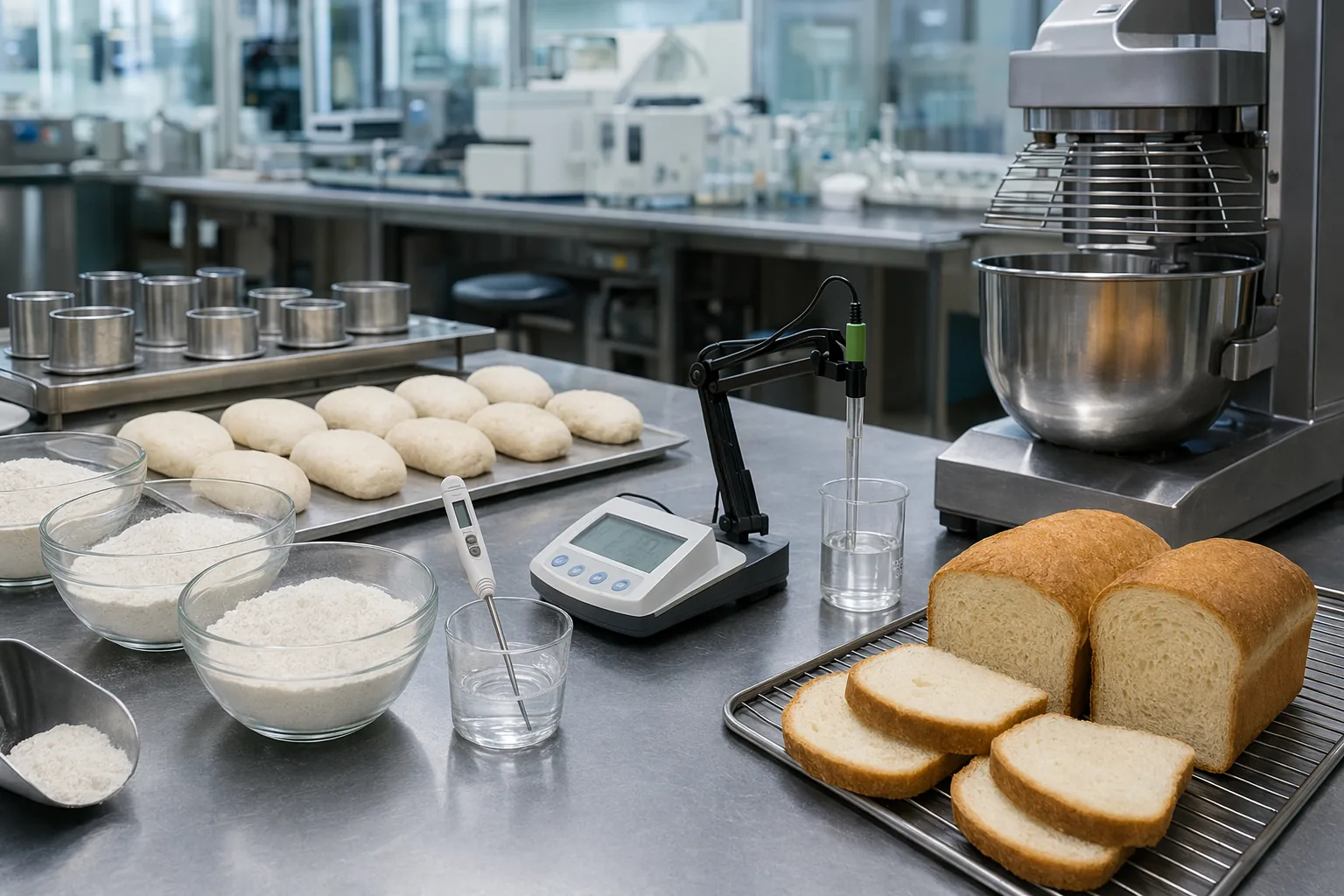
For bakeries, flour mills, and premix manufacturers, fungal alpha-amylase is a practical bread enzyme for improving fermentable sugars, loaf volume, crust color, and crumb softness when it is selected and dosed against real flour performance.
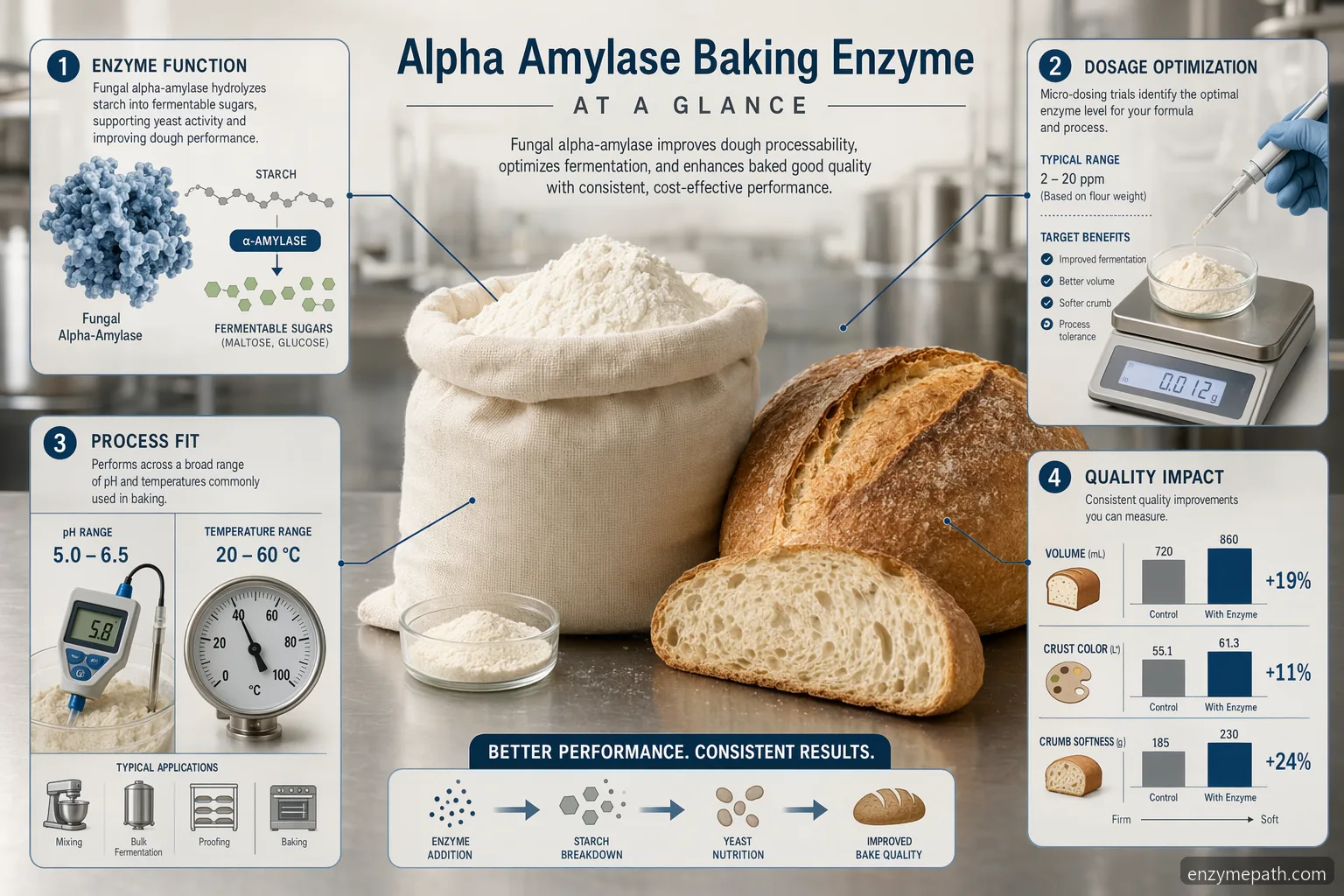
Why buyers are reviewing the alpha amylase baking enzyme market
The alpha amylase baking enzyme market is driven by bakeries seeking more consistent dough fermentation, better flour tolerance, and improved eating quality without changing core recipes. Fungal alpha-amylase hydrolyzes damaged starch into smaller dextrins and sugars that yeast can use, helping bread volume, crust color, and early crumb softness. In cakes and sweet goods, it can support tenderness when matched to flour, sugar, fat, and baking profile. In flour treatment, millers use it to normalize low-amylase wheat and improve downstream baking performance. The troubleshooting challenge is that amylase enzyme baking results depend strongly on flour falling number, starch damage, water absorption, and bake time. A product that performs well in pan bread may be too active for long fermentation or high-hydration systems. Buyers should treat this as a process-control ingredient, not a generic commodity.
Primary use: bread, cake, buns, rolls, and flour treatment. • Main risks: stickiness, gummy crumb, excess browning, and variable results. • Best purchasing basis: activity, application data, and cost per metric ton of flour.
Dosage guidance for fungal amylase baking trials
How to use amylase enzyme in baking starts with the supplier TDS, because commercial products differ in activity units, granulation, carrier, and concentration. As a screening range, many bakeries trial fungal alpha-amylase at about 10-100 ppm product on flour weight, then narrow the range by flour quality and finished-product targets. Bread trials often begin with a control, a low dose, a target dose, and a high dose, such as 25%, 50%, and 100% above or below the supplier recommendation. Cake and flour-treatment applications may need separate curves because sugar, fat, chemical leavening, and batter viscosity alter the response. Dose should never be copied only from another plant, because mixing energy, proof time, oven spring, and flour age can change the outcome. Record the dosage as product weight and as declared enzyme activity whenever possible.
Start with a control and at least three dosage points. • Express dosage on flour basis, not total dough weight. • Confirm weighing accuracy for low-dose powders or liquids. • Hold flour lot, water temperature, yeast level, and proof time constant.
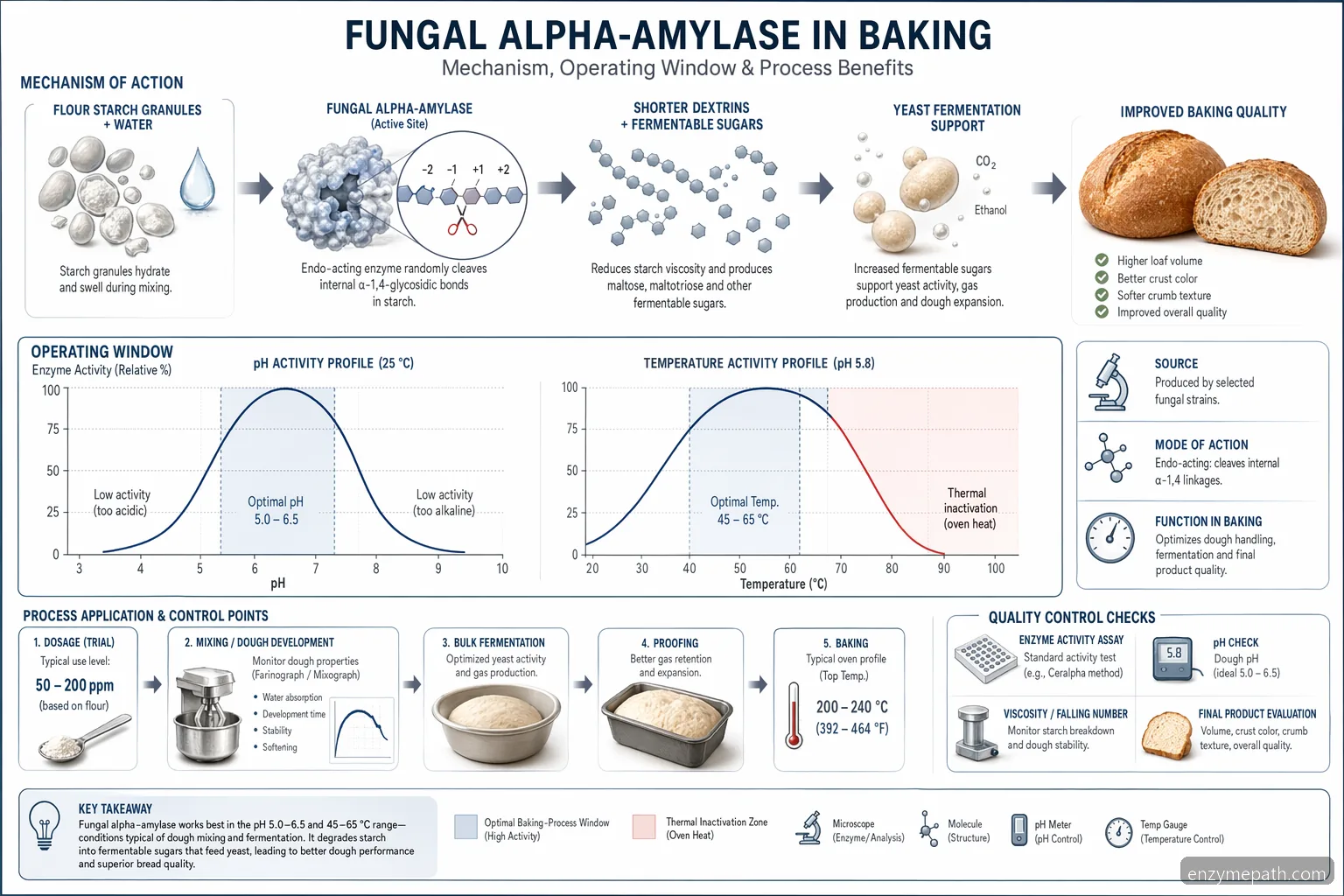
pH, temperature, and process conditions that matter
Alpha amylase enzyme in baking is active during dough make-up, fermentation, proofing, and the early phase of baking until heat reduces enzyme activity. Fungal alpha-amylase commonly performs well around pH 4.5-6.0, which aligns with many yeast-raised doughs, although each product must be checked against its TDS. Activity commonly increases as dough warms, with many fungal alpha-amylases showing strong activity near 45-60 C before thermal inactivation in the oven. During baking, crumb temperature rises gradually, so the enzyme can still modify starch before the crumb reaches inactivation conditions, often above about 75-85 C depending on formulation and enzyme type. Troubleshooting should focus on the time-temperature profile, not only oven set point. Long proof, slow baking, high water, or delayed cooling can magnify the effect of an otherwise normal dose.
Typical dough pH check: about 4.5-6.0 for many bread systems. • Monitor dough temperature after mixing and before proofing. • Evaluate crumb set and internal temperature, not just oven temperature. • Revalidate when changing fermentation time or retarder conditions.
QC checks for troubleshooting bread, cake, and flour treatment
A disciplined QC plan separates real enzyme performance from normal bakery variation. For flour treatment, use falling number, amylograph or RVA viscosity, damaged starch, moisture, protein, and ash to understand the substrate before adding amylase enzyme for baking. In bread, measure dough handling, proof height, oven spring, specific volume, crust color, crumb grain, sliceability, and crumb firmness over storage. For cake, track batter specific gravity, viscosity, volume, symmetry, cell structure, tenderness, and gumminess. Sensory review should be paired with instrumental data because over-amylation can feel moist at first but become gummy or collapse under slicing. If an anti-staling enzyme claim is desired, confirm whether fungal alpha-amylase alone meets the target; some anti-staling systems use different amylase classes or blends. Keep retains from each flour, enzyme lot, and baked trial for comparison.
Use the same bake schedule for all trial points. • Measure crumb firmness at day 1 and later shelf-life points. • Check gummy crumb before approving higher dosage. • Link trial data to flour COA and enzyme lot number.
Supplier qualification and cost-in-use evaluation
B2B procurement should compare more than price per kilogram when evaluating the baking enzyme market. Request the COA for the current lot, TDS for dosage and process limits, SDS for handling and storage, and statements covering composition, carriers, allergens, and food-use suitability for the intended market. Ask how enzyme activity is defined, because unit methods may not be interchangeable across suppliers. Review shelf life, recommended storage temperature, dust control, solubility, dispersion, and compatibility with premixes or flour improvers. Cost-in-use should be calculated per metric ton of flour and per thousand finished units, including waste reduction, rework, shelf-life targets, and operational risk. Before supplier approval, run a pilot validation under plant conditions, then confirm scale-up on at least one normal production lot. Ongoing qualification should include lot-to-lot activity review and complaint traceability.
Required documents: COA, TDS, SDS, and ingredient composition statement. • Compare delivered cost against active dosage, not package price alone. • Validate storage, handling, and dosing method before commercialization. • Set incoming inspection and retain-sample procedures.
Technical Buying Checklist
Buyer Questions
Fungal alpha-amylase breaks damaged starch into smaller dextrins and fermentable sugars during mixing, fermentation, proofing, and early baking. In bread, this can support yeast activity, loaf volume, crust color, and early crumb softness. In flour treatment, it helps normalize low-amylase flour. The effect depends on flour quality, dosage, proof time, and baking profile, so plant trials are required.
Dose on flour weight and follow the supplier TDS because activity units vary by product. A practical screening approach is to run a control plus low, target, and high dosages within the supplier range; many products are initially evaluated around 10-100 ppm product on flour. Final approval should be based on dough handling, finished product quality, shelf-life data, and cost-in-use.
Excess alpha-amylase can cause sticky dough, poor machining, excessive oven color, gummy crumb, weak sidewalls, poor slicing, or a tacky mouthfeel. Problems may be more visible after storage or in high-hydration formulas. If these symptoms appear, reduce dosage, check flour falling number and damaged starch, review proof time, and verify the enzyme lot and weighing procedure.
No. Baking soda is sodium bicarbonate, a chemical leavening and pH-adjusting ingredient, not an enzyme cleaner and not a baking enzyme. Enzymes used in the baking industry, such as fungal alpha-amylase, are proteins that catalyze specific reactions in flour components. Baking soda may affect dough pH, which can indirectly influence enzyme performance, but it does not provide amylase activity.
Request a current COA, TDS, SDS, activity definition, recommended dosage, storage conditions, shelf life, ingredient or carrier statement, allergen statement, and traceability information. For supplier qualification, also ask for application guidance, lot-to-lot consistency data where available, and pilot support. Approval should include plant validation, incoming inspection criteria, retain samples, and a cost-in-use comparison.
Fungal Alpha-Amylase (Baking Grade) for Research & Industry
Need Fungal Alpha-Amylase (Baking Grade) for your lab or production process?
ISO 9001 certified · Food-grade & research-grade · Ships to 80+ countries
Frequently Asked Questions
What does fungal alpha-amylase do in baking?
Fungal alpha-amylase breaks damaged starch into smaller dextrins and fermentable sugars during mixing, fermentation, proofing, and early baking. In bread, this can support yeast activity, loaf volume, crust color, and early crumb softness. In flour treatment, it helps normalize low-amylase flour. The effect depends on flour quality, dosage, proof time, and baking profile, so plant trials are required.
How should an industrial bakery dose amylase enzyme for baking?
Dose on flour weight and follow the supplier TDS because activity units vary by product. A practical screening approach is to run a control plus low, target, and high dosages within the supplier range; many products are initially evaluated around 10-100 ppm product on flour. Final approval should be based on dough handling, finished product quality, shelf-life data, and cost-in-use.
What are signs of too much alpha-amylase in bread?
Excess alpha-amylase can cause sticky dough, poor machining, excessive oven color, gummy crumb, weak sidewalls, poor slicing, or a tacky mouthfeel. Problems may be more visible after storage or in high-hydration formulas. If these symptoms appear, reduce dosage, check flour falling number and damaged starch, review proof time, and verify the enzyme lot and weighing procedure.
Is baking soda an enzyme cleaner?
No. Baking soda is sodium bicarbonate, a chemical leavening and pH-adjusting ingredient, not an enzyme cleaner and not a baking enzyme. Enzymes used in the baking industry, such as fungal alpha-amylase, are proteins that catalyze specific reactions in flour components. Baking soda may affect dough pH, which can indirectly influence enzyme performance, but it does not provide amylase activity.
What documents should buyers request from a baking enzyme supplier?
Request a current COA, TDS, SDS, activity definition, recommended dosage, storage conditions, shelf life, ingredient or carrier statement, allergen statement, and traceability information. For supplier qualification, also ask for application guidance, lot-to-lot consistency data where available, and pilot support. Approval should include plant validation, incoming inspection criteria, retain samples, and a cost-in-use comparison.
Related: Fungal Alpha-Amylase for Baking Performance Control
Turn This Guide Into a Supplier Brief Contact EnzymePath to compare fungal alpha-amylase options for your flour, process conditions, QC targets, and cost-in-use model. See our application page for Fungal Alpha-Amylase for Baking Performance Control at /applications/baking-enzymes-market/ for specs, MOQ, and a free 50 g sample.
Contact Us to Contributehello@mail.enzymepath.com