Baking Enzymes Where to Buy: Fungal Alpha-Amylase for Industrial Baking
Find fungal alpha-amylase baking enzyme suppliers, dosage ranges, pH/temperature guidance, QC checks, COA/TDS/SDS, and pilot validation steps.
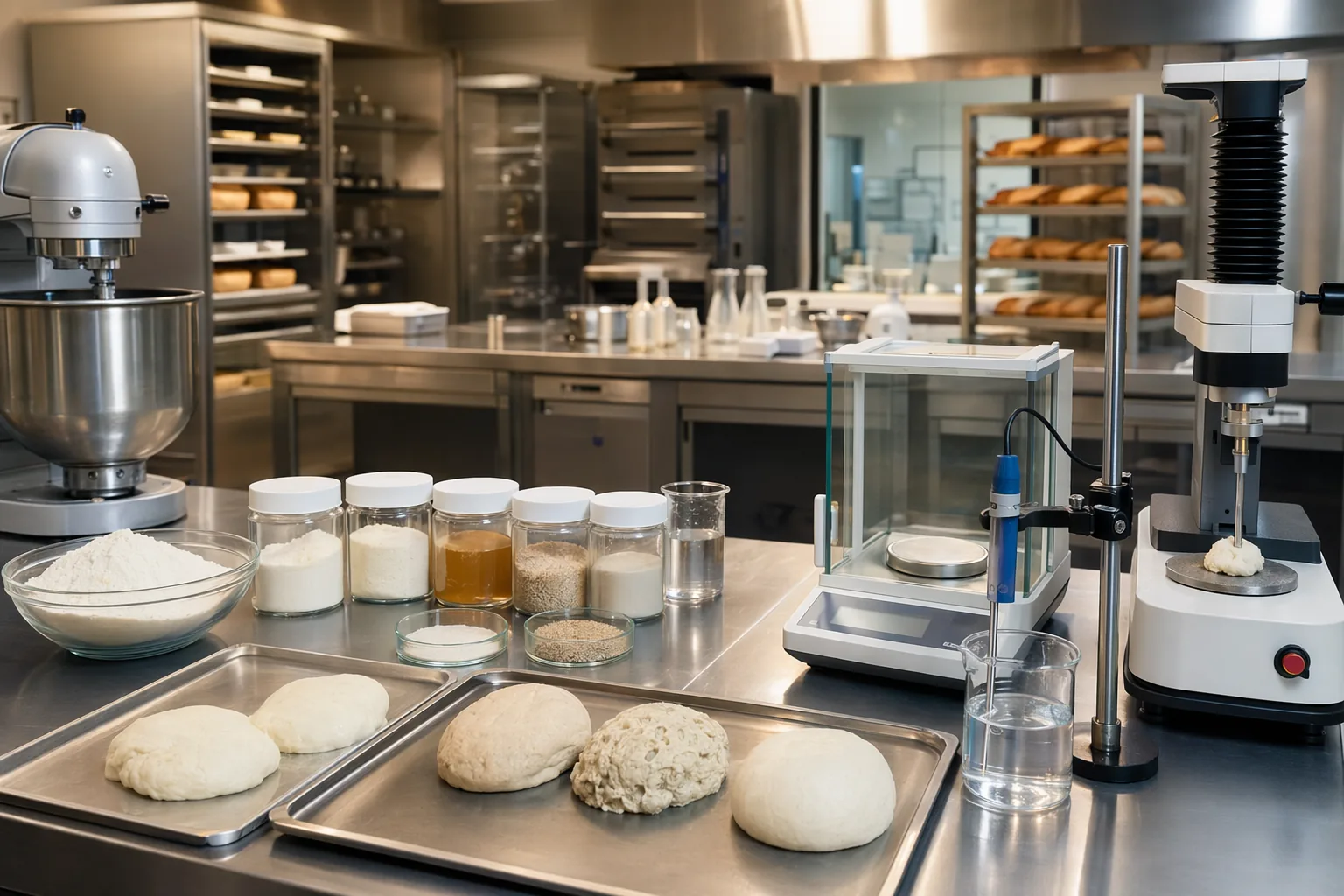
For bakeries, premix manufacturers, and flour mills, buying the right fungal alpha-amylase is a process decision: match the enzyme to flour variability, dough system, proofing time, bake profile, and measurable product targets.
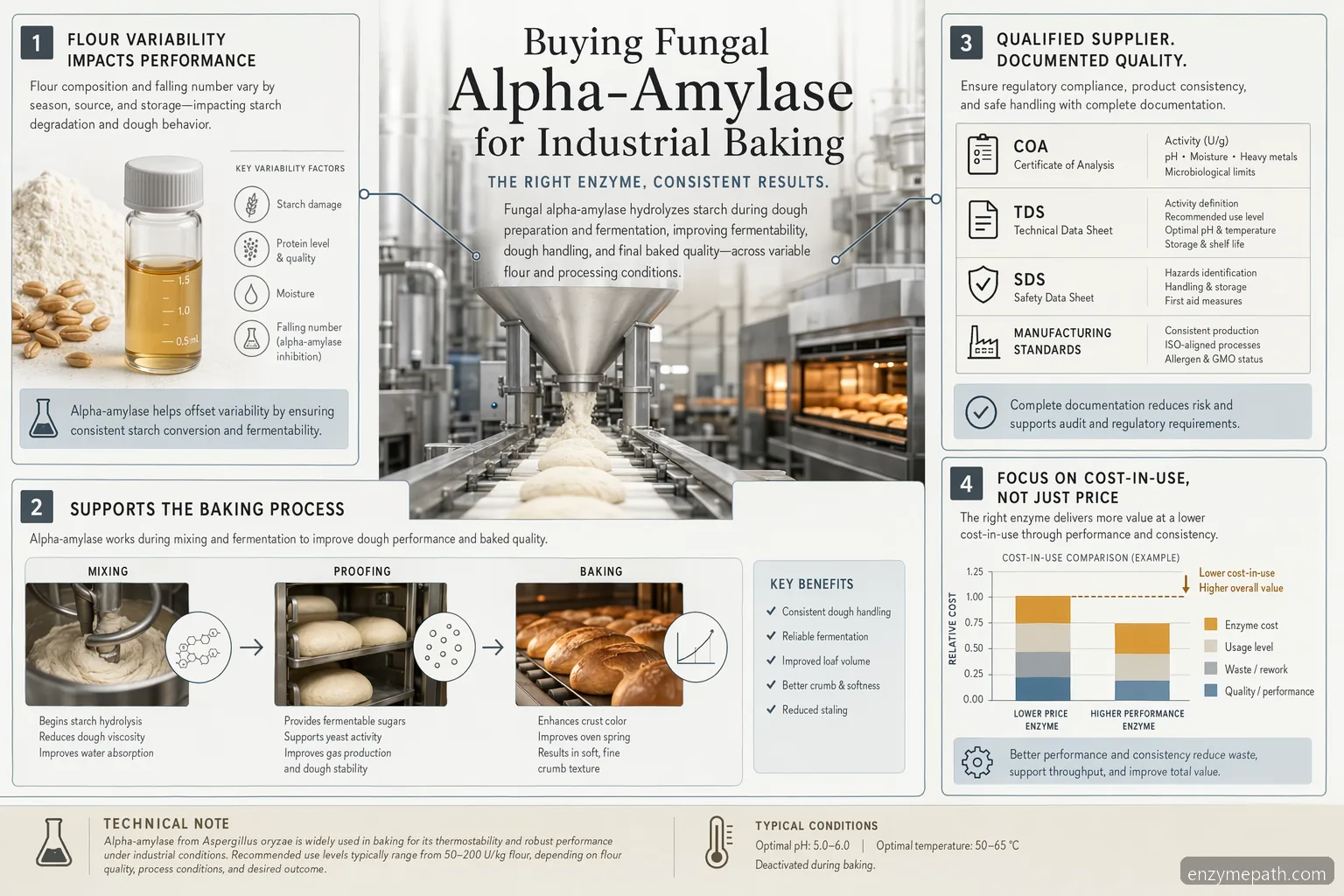
What Industrial Buyers Mean by “Baking Enzymes Where to Buy”
When a purchasing or R&D team searches for baking enzymes where to buy, the real question is usually not only price. The buyer needs a dependable baking enzyme that solves a defined problem: low loaf volume, pale crust, inconsistent fermentation, tight crumb, flour variation, or short shelf-life expectations. Fungal alpha-amylase for baking hydrolyzes damaged starch into smaller dextrins and fermentable sugars, supporting yeast activity and Maillard browning. It is widely used in bread, rolls, buns, and flour treatment systems. In cakes, application depends on formula, mixing method, and desired softness profile. For anti-staling targets, fungal alpha-amylase may contribute to crumb softness, but it is not always a direct substitute for enzymes designed specifically for crumb firming control. A B2B supplier should help match the enzyme to process data, not just ship a catalog item.
Define the defect before requesting samples. • Specify bread, cake, or flour treatment application. • Ask for activity units and dosage basis. • Confirm enzyme form: powder, granule, or liquid.
Practical pH and Temperature Conditions for Fungal Alpha-Amylase
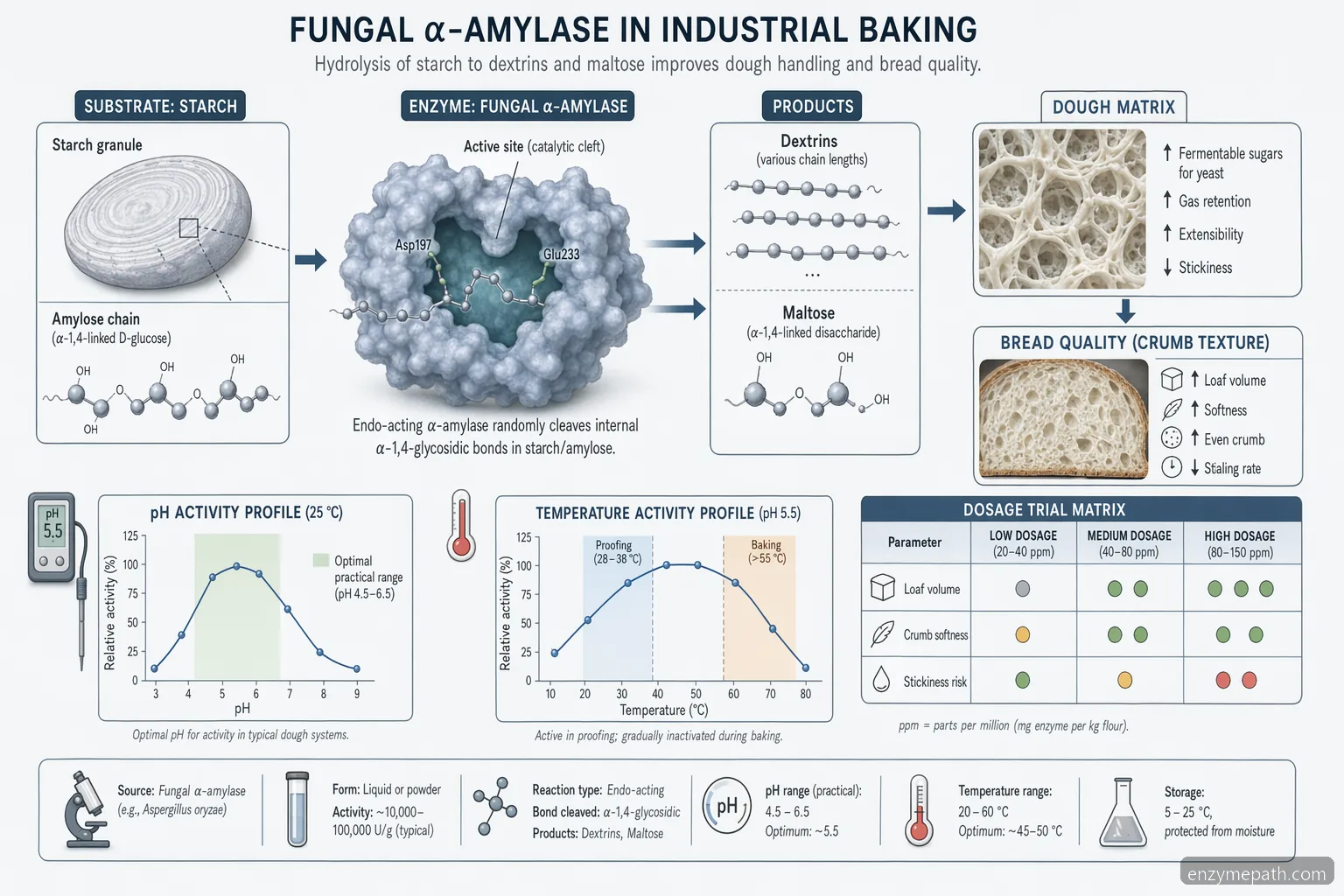
Fungal alpha-amylase used in baking generally performs best in mildly acidic dough systems. Many commercial products are designed for activity around pH 4.5 to 6.0, with strong practical relevance near common wheat dough pH. Activity increases as dough warms during mixing, resting, proofing, and early baking, then declines as the enzyme is heat-inactivated. A typical activity window is about 30 to 60°C, with significant loss as the crumb temperature rises during bake; final inactivation depends on formula, moisture, loaf size, oven profile, and enzyme source. These figures are guidance only, because each product’s TDS should define its tested activity method and operating range. In production, the important question is whether the enzyme produces the desired starch modification before thermal inactivation. Too little activity may show no effect; too much can create sticky dough, gummy crumb, or excessive crust color.
Common dough pH relevance: about 4.5 to 6.0. • Practical temperature activity: about 30 to 60°C. • Thermal inactivation occurs during baking, but timing varies. • Always compare against the supplier TDS.
Dosage Bands, Trial Design, and Scale-Up
Dosage must be based on enzyme activity, carrier concentration, flour quality, and process time. Because activity units vary by supplier, there is no universal gram-per-ton recommendation that fits every fungal amylase baking product. For initial screening, many industrial bakeries test a low, middle, and high dose around the supplier’s recommended TDS range, expressed on flour basis or premix inclusion rate. A practical design may include a control, 50% of recommended midpoint, midpoint, and 150% of midpoint, provided the high dose remains safe for product quality. Track dough absorption, mixing tolerance, stickiness, proof height, oven spring, loaf volume, crumb grain, crust color, and finished texture. If the enzyme is added through a flour improver or concentrate, validate distribution uniformity and micro-ingredient scaling accuracy. Move to production only after pilot data confirms repeatable performance across at least two flour lots.
Use flour-basis dosing unless the TDS states otherwise. • Run a no-enzyme control in every trial. • Test at least three enzyme levels. • Validate across variable flour lots. • Check for overdosing symptoms such as gumminess.
Supplier Qualification: COA, TDS, SDS, and Documentation
A qualified enzymes baking industry supplier should provide documentation that lets quality, regulatory, procurement, and production teams make the same decision from the same data. Request a current Certificate of Analysis for each lot, a Technical Data Sheet with activity units and recommended use range, and a Safety Data Sheet for handling guidance. Ask for carrier details, physical form, storage conditions, shelf life, allergen statements where applicable, and country-specific regulatory-use support for bakery processing aids or ingredients. Do not rely on vague claims such as “high activity” without the test method and specification limits. For powdered baking enzymes, evaluate dusting behavior, flowability, segregation risk, and compatibility with flour improvers. For liquids, check viscosity, pumpability, preservation system, and freeze-thaw sensitivity. Supplier qualification should also include lead time, lot traceability, change notification practices, technical response time, and sample availability for pilot validation.
COA: lot activity, specification, date, traceability. • TDS: dosage, pH, temperature, storage, application notes. • SDS: safe handling and exposure controls. • Confirm change notification and sample support.
Cost-in-Use and the Baking Enzymes Market
The lowest enzyme price per kilogram is not always the lowest cost-in-use. Compare baking enzymes by delivered activity, recommended dosage, yield impact, scrap reduction, crumb quality, shelf-life contribution, and process stability. A concentrated product may cost more per kilogram but dose lower and reduce warehouse handling. A cheaper product may require higher inclusion, create dust issues, or perform inconsistently across flour lots. In the baking enzymes market, suppliers may offer fungal alpha-amylase alone or as part of blends containing xylanase, glucose oxidase, protease, lipase, or anti-staling enzyme systems. For troubleshooting, single-enzyme trials are often useful because they isolate cause and effect. For finished improvers, blend validation is more realistic. Procurement should evaluate total annual consumption, minimum order quantities, storage life, packaging size, technical service, and the cost of failed production. The best buying decision balances performance evidence with supply reliability.
Compare cost per metric ton of flour treated. • Include waste reduction and quality consistency. • Account for storage, handling, and dosing accuracy. • Separate single-enzyme trials from blend optimization.
Common Troubleshooting Signals in Bread, Cake, and Flour Treatment
Fungal alpha-amylase is often selected when fermentation appears under-supported or finished bread lacks volume and color. In bread systems, under-dosing may show as slow proof response, pale crust, dense crumb, or limited oven spring when flour has low damaged starch or low natural amylase activity. Over-dosing can cause sticky dough, weak slicing, gummy crumb, excessive browning, or poor shape retention. In cake applications, the value depends on formula moisture, sugar level, mixing intensity, and target softness; pilot validation is essential because excessive starch breakdown may affect structure. In flour treatment, mills and premix manufacturers should consider native falling number, damaged starch, ash, protein, and customer bake tests before standardizing inclusion. For anti-staling projects, measure crumb firmness over time rather than relying on fresh-bake observations only. The right enzyme program should be guided by measurable defects and acceptance criteria.
Under-dose signals: pale crust, low volume, dense crumb. • Over-dose signals: stickiness, gumminess, excessive browning. • Use falling number and bake tests for flour treatment. • Measure shelf-life texture over multiple days.
Technical Buying Checklist
Buyer Questions
Industrial buyers should source baking enzymes from suppliers that provide technical documentation, application support, and pilot samples, not only a product listing. Request fungal alpha-amylase options with COA, TDS, SDS, activity units, recommended dosage range, storage conditions, and lead time. Before purchasing production quantities, run bake trials on your flour, formula, and oven profile to confirm performance and cost-in-use.
Start with the supplier’s TDS recommendation because enzyme activity units and concentration differ by product. A practical pilot plan uses a no-enzyme control plus low, midpoint, and high levels on flour basis. Evaluate dough stickiness, proof response, oven spring, loaf volume, crumb grain, crust color, and texture over storage. Avoid scaling up from a single bench result without flour-lot confirmation.
No. Baking soda is sodium bicarbonate, a chemical leavening and pH-adjusting ingredient; it is not an enzyme and it does not catalyze starch or protein breakdown like baking enzymes. In bakery processing, fungal alpha-amylase is a biological catalyst used at low dosage to modify starch during dough processing. The two materials have different functions, specifications, handling requirements, and buying criteria.
Fungal alpha-amylase can influence crumb softness by producing dextrins and improving fermentation support, but anti-staling performance should be proven with texture measurements over shelf life. For strong crumb-firming control, bakeries often evaluate specialized enzyme systems such as maltogenic amylase blends. The best choice depends on bread type, storage target, formula, and whether fresh volume or multi-day softness is the main defect.
Request a COA for the supplied lot, a TDS with activity units and use guidance, and an SDS for safe handling. Also ask for carrier information, allergen statements where applicable, storage and shelf-life data, regulatory-use support for your market, and traceability details. For supplier qualification, confirm sample availability, technical support, change notification practices, lead time, and packaging options.
Fungal Alpha-Amylase (Baking Grade) for Research & Industry
Need Fungal Alpha-Amylase (Baking Grade) for your lab or production process?
ISO 9001 certified · Food-grade & research-grade · Ships to 80+ countries
Frequently Asked Questions
Where to buy enzymes for baking in bulk?
Industrial buyers should source baking enzymes from suppliers that provide technical documentation, application support, and pilot samples, not only a product listing. Request fungal alpha-amylase options with COA, TDS, SDS, activity units, recommended dosage range, storage conditions, and lead time. Before purchasing production quantities, run bake trials on your flour, formula, and oven profile to confirm performance and cost-in-use.
What dosage of fungal alpha-amylase should a bakery start with?
Start with the supplier’s TDS recommendation because enzyme activity units and concentration differ by product. A practical pilot plan uses a no-enzyme control plus low, midpoint, and high levels on flour basis. Evaluate dough stickiness, proof response, oven spring, loaf volume, crumb grain, crust color, and texture over storage. Avoid scaling up from a single bench result without flour-lot confirmation.
Is baking soda an enzyme cleaner?
No. Baking soda is sodium bicarbonate, a chemical leavening and pH-adjusting ingredient; it is not an enzyme and it does not catalyze starch or protein breakdown like baking enzymes. In bakery processing, fungal alpha-amylase is a biological catalyst used at low dosage to modify starch during dough processing. The two materials have different functions, specifications, handling requirements, and buying criteria.
Can fungal alpha-amylase work as an anti-staling enzyme?
Fungal alpha-amylase can influence crumb softness by producing dextrins and improving fermentation support, but anti-staling performance should be proven with texture measurements over shelf life. For strong crumb-firming control, bakeries often evaluate specialized enzyme systems such as maltogenic amylase blends. The best choice depends on bread type, storage target, formula, and whether fresh volume or multi-day softness is the main defect.
What documents should I request before buying baking industry enzymes?
Request a COA for the supplied lot, a TDS with activity units and use guidance, and an SDS for safe handling. Also ask for carrier information, allergen statements where applicable, storage and shelf-life data, regulatory-use support for your market, and traceability details. For supplier qualification, confirm sample availability, technical support, change notification practices, lead time, and packaging options.
Related: Fungal Alpha-Amylase for Baking Performance Control
Turn This Guide Into a Supplier Brief Request a fungal alpha-amylase baking enzyme sample, TDS, COA, SDS, and pilot-trial guidance from EnzymePath. See our application page for Fungal Alpha-Amylase for Baking Performance Control at /applications/baking-enzymes-market/ for specs, MOQ, and a free 50 g sample.
Contact Us to Contributehello@mail.enzymepath.com